
The Knowledge I Lost (And How You Won't)
Reflections on forgotten lessons in software developemnt.
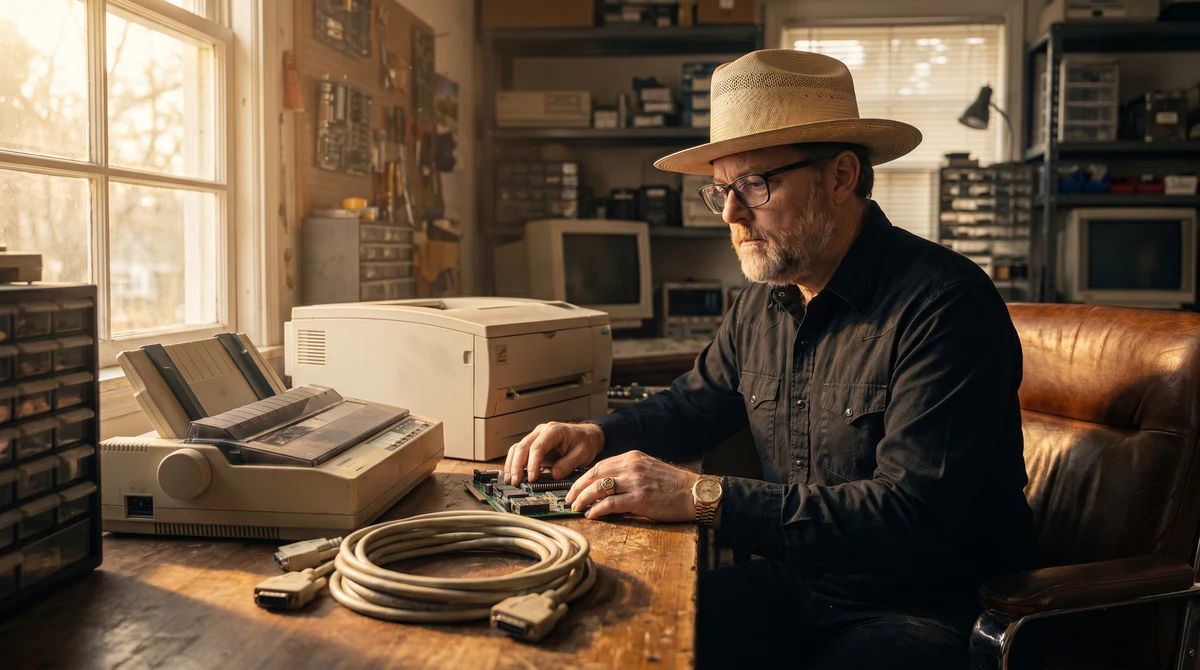
I've been building commerce systems for 30 years. Oakley. Major enterprise brands. Millions of lines of code. Thousands of decisions.
And I can't tell you why I made half of them.
Not because I forgot. Because I never captured it in the first place. I didn't have the time. I didn't have the tools. And now it's gone.
The Printer Problem
Late 90s. I was replacing a system where everything printed on dot matrix printers. Laser printers were the new norm. The web was just starting to be a place where real work happened.
I needed to figure out how to print information from a web app automatically. Long before PDF libraries. Long before any libraries, really.
I spent months on this. Months. I tried serial cables. I tried sending data to different printers with different protocols. I dreamt about it. I woke up thinking about it.
I know I tried so many things. I know I eventually solved it. But I can't tell you what those things were. I can't tell you what finally worked or why.
All I have left is this: when I finally cracked it, I knew. I knew I was going to build things for the rest of my career. That moment mattered. It shaped everything that came after.
And I have maybe 200 words about it. The ones you just read.
What Gets Lost
That developer who spent six months debugging a race condition in a checkout flow? I solved that in 2012. But I can't help them because I don't remember the details.
That architect trying to decide between monolith and microservices for a commerce platform? I've made that decision four times. But I can't show them my reasoning because I never wrote it down.
That team stuck on a seemingly impossible technical constraint? I've probably hit it. Probably found a way through. But I can't point them to it because it only exists in my head, and even there it's fading.
30 years of hard-won experience. Just evaporating.
Not because I didn't want to capture it. Because the overhead was too high. Writing took time I didn't have. Context switching killed productivity. Documentation became a chore instead of a habit.
So I didn't do it. And now I can't get it back.
The Shift
In 2024, I realized something: the next 30 years won't look like the last 30.
Not because the problems are different. Because the tools finally exist to capture everything.
So I rebuilt my entire workflow around AI. Not as a toy. As infrastructure.
Claude Code handles development tasks. BlackOps orchestrates content and knowledge. MCP servers connect everything. Voice commands eliminate typing overhead.
Now every decision gets captured. Every bug gets documented. Every lesson gets written down. In real time. Without the overhead that killed it before.
My scheduler found a bug, fixed it, and opened a PR while I was on a walk. Not because I told it to. Because the system is designed to capture everything that happens.
I can't get my 30 years back. But the next me won't have this regret.
What This Actually Means
If you're early in your career, you have an advantage I didn't have. You can start capturing now.
Not someday. Not when you have time. Now.
Every bug you fix, document it. Not just the solution. The dead ends. The things you tried that didn't work. The moment you figured it out.
Every architectural decision, write down why. Not just what you chose. What you considered. What you traded off. What worried you.
Every lesson learned the hard way, capture it while it's fresh. The details matter. The context matters. Future you will want this.
The Compounding Effect
Here's what happens when you do this for years:
You don't search your notes. You talk to them.
Someone asks you a question. You don't dig through files. You ask Claude: "Tell me about the time I had to send invoices to a laser printer on demand and how I did it." And you get a detailed explanation of what you tried, what worked, what didn't, and why.
You're about to make a decision. You don't try to remember what you did last time. You ask: "What did I consider when choosing between monolith and microservices for the last three commerce platforms?" And you get all the context, trade-offs, and lessons learned.
You're stuck on a problem. You don't hope you remember solving something similar. You ask: "Have I dealt with race conditions in checkout flows before?" And you get every instance, every approach, every outcome.
That's what 30 years of captured knowledge looks like when it becomes conversational context. Not an archive you search. A knowledge base you talk to.
I don't have it. You can.
How to Actually Do This
The tools exist. Claude as your interface. BlackOps to orchestrate capture and make everything conversational context. Voice interfaces to eliminate typing overhead. MCP servers to connect it all.
But the tools don't matter if you don't build the habit.
Start small. Capture one thing today. One bug. One decision. One lesson.
Do it again tomorrow. And the day after.
Make it automatic. Make it part of the process, not something extra you do when you have time.
Build the system that makes capture effortless and knowledge retrieval conversational. Then use it.
The goal isn't a searchable archive. The goal is 30 years of experience that you can talk to.
What I Wish I Had
I wish I could ask Claude right now: "Tell me about the time I had to send invoices to a laser printer on demand and how I did it."
I wish it could tell me about every serial cable I tried. Every protocol. Every failed approach. Every moment of frustration. And exactly what clicked when I finally solved it.
I wish I had that for every problem I've solved in 30 years.
I don't. But you will.
20 years from now, you'll either have a knowledge base that answers every question about your career, or you'll have the same regret I do.
Start capturing. Start now. Your future self will thank you.
This post came out of a Brain.
Talk through what you already know. BlackOps turns it into a structured knowledge base, then writes and publishes from it, to your own domain, X, LinkedIn, Threads, and your newsletter. No email until you have seen your Brain.
I wrote this post inside BlackOps, my content operating system for thinking, drafting, and refining ideas — with AI assistance.
If you want the behind-the-scenes updates and weekly insights, subscribe to the newsletter.
Related Posts

I Walked Up to Doc Holliday's Grave. Here Is Everything That Happened After.
I walked 2.6 miles up to Doc Holliday's grave in Glenwood Springs and logged it from my phone. The log, the graphic, and the post all came out of one conversation.

The Least Friction Between You and Your Early Users
When you ship something new, the hard part is hearing from your first users. The lowest-friction fix is a button that lets them talk. Here is how to add it to your app or site with an agent, and how I put it in Spotter.

Tracking My Wine Taste Until It Knew My Next Bottle
I stopped keeping wine notes and built a Brain instead. Then it watched me buy a bottle and told me what to drink next. Here is why a model beats a notebook.