
My First Week with OpenClaw: From Skeptic to Believer
My First Week with OpenClaw: From Skeptic to Believer
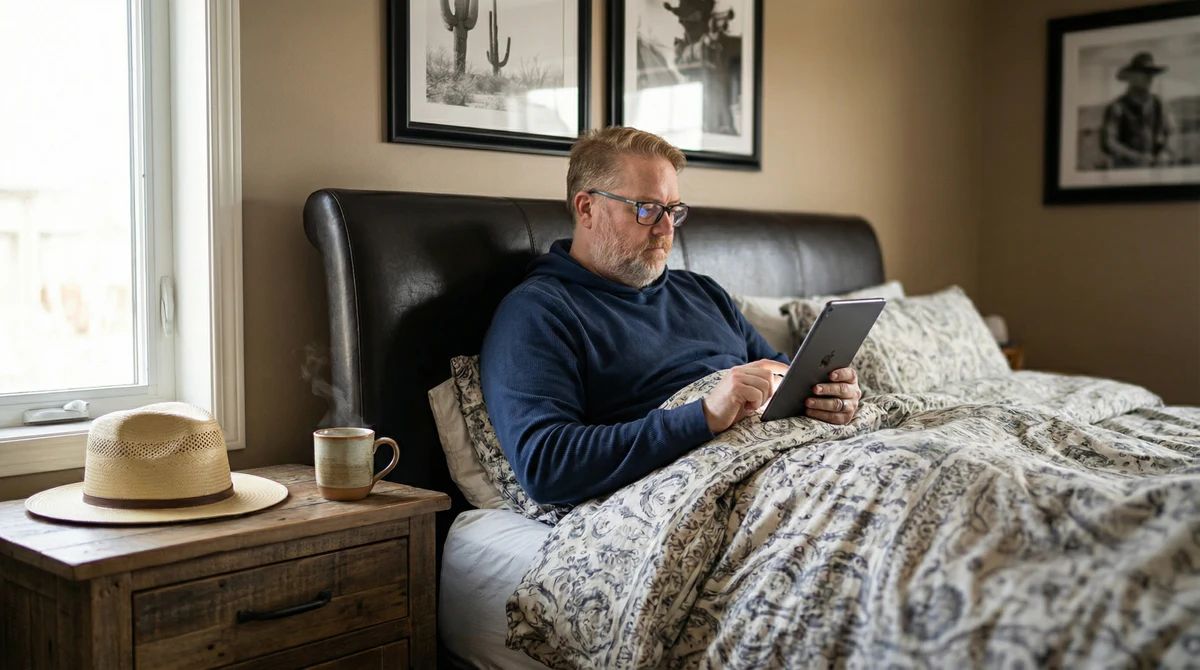
I did a week's worth of work before getting out of bed this morning. From my iPad. This is the story of going from "OpenClaw skeptic" to running an army of agents.
The Morning That Changed Everything
Sunday, February 1st, 2026. 8:49 AM.
Still in bed. iPad Mini propped on my chest. I typed one message to Chief:
"Start working through the overnight tasks. Even though it's morning. Don't wait for my approval."
Then I caught up on Twitter, er, X.
When I check just a little while later, here's what had been completed:
5 sub-agents spawned in parallel:
-
12 Reddit/HN engagement opportunities researched and documented
-
VitalWall competitive analysis completed (identified our unique positioning gap)
-
VoiceCommit repositioning strategy created (dev tool → intelligence notebook)
-
5 blog post drafts written (8,000 words total)
-
6 new VitalWall demo walls built (API Health Monitor, Product Launches, Team Activity, Social Feed, System Metrics, Customer Reviews)
Fixed the VitalWall Disney wait time demo
My time investment: 20 minutes.
10 minutes to spawn the agents. 10 minutes to review the Slack notifications as each completed.
That's when I went from skeptic to believer.
Ten Days Earlier: The Install That Almost Didn't Happen
Thursday, January 23rd, 2026. I was exhausted.
Three SaaS products in active development. BlackOps Center, VitalWall, VoiceCommit. No team. Just me, 30 years of dev experience, and the growing realization that I couldn't scale myself anymore.
I'd tried AI assistants before. ChatGPT for code snippets. Claude for writing. Cursor for editing. All felt like slightly better autocomplete.
Then someone on Twitter mentioned OpenClaw (née Clawdbot, née Moltbot — yes, it got renamed twice by Anthropic over trademark concerns, whole other story).
The pitch sounded too good: "Persistent AI that runs on your machine, connects to your tools, remembers everything, and can spawn sub-agents to work while you sleep."
I've been writing code since 1996. I know vaporware when I hear it.
But I was desperate.
npm install -g openclaw
openclaw init
Two commands. Five minutes later, I had an AI running locally that could read my files, execute commands, and actually remember our previous conversations.
I named it Chief. My digital Chief of Staff.
I didn't believe it would actually work.
The Mental Model That Changes Everything
Here's the shift that took me a week to understand:
Stop thinking "AI assistant." Start thinking "AI workforce."
Old Mental Model (What I Expected)
-
I ask questions → AI answers
-
I write code → AI suggests edits
-
I need help → AI provides snippets
-
Relationship: Me + Helper
New Mental Model (What Actually Works)
-
I set strategy → Agents execute
-
I spawn work → Agents complete overnight
-
I review outputs → Agents iterate
-
Relationship: Senior Engineer + Engineering Team
The breakthrough wasn't better AI. It was realizing Chief isn't my assistant, he's is my engineering manager, coordinating an army of agents I spawn as needed.
Day 1-3: Learning to Delegate
First Task: Automate My 10pm Tweet Recap
Every night at 10pm ET, I tweet a recap of what we shipped that day. Good for building in public. Tedious to remember.
One cron job later, Chief was reviewing our daily work and drafting tweets automatically.
My skeptic brain: "Okay, neat party trick. Let's see it handle real work."
Second Task: Fix VoiceCommit iOS Issues
OAuth callbacks broken. Supabase configuration needed updates. App Store prep files missing.
I started typing out the task. Chief interrupted:
"I can spawn a sub-agent for this while you work on VitalWall. Want me to?"
My skeptic brain: "Wait, you can split off parallel work streams?"
That's when it clicked. I wasn't managing one AI. I was managing a workforce that could spawn specialized agents for each task.
By day 3, I had agents working overnight on:
-
Demo creation
-
Lead research
-
Content generation (drafts go straight into BlackOps Center for scheduling and publishing)
-
Community monitoring
-
Bug fixes
My time: 15 minutes to spawn them all. Their work: 6+ hours while I slept.
The Uncomfortable Truth: Token Limits and Model Configuration Hell
Let me be honest about what nobody talks about:
Claude Opus 4.0 hit token limits almost every session. Mid-conversation, mid-task, mid-thought. Gone. Start over.
I kept burning through my Opus tokens trying to configure alternative models. MiniMax M2.1? Couldn't get it working correctly. OpenRouter? Configuration maze. Every attempt burned more Opus credits while I debugged.
The entire first week was "this model worked... until it didn't."
177K token context sounds amazing until you actually use it. Complex work sessions eat that fast. One detailed technical discussion and you're starting fresh.
This is the reality of AI development in 2026. Token economics are real. Model configuration is harder than it should be. Your tool might get renamed by a corporation (twice).
Here's why that doesn't matter:
Once you figure out how to configure it, OpenClaw handles model failover automatically. Opus hits limits? Fall back to GPT-5. That hits limits? Try Sonnet. The system adapts. Hint: Use Claude Code to fix your config if you hit trouble.
I'm not building for perfect AI. I'm building resilient workflows that ship despite hitting every possible limit along the way.
Day 4-7: The Overnight Army Proves Itself
Saturday, 1:49 AM
Now agents are spawned while I sleep:
-
VitalWall Demo Builder — Create 5 interactive demos showing different use cases
-
Lead Researcher — Find 60+ qualified prospects across Reddit/Twitter/HN
-
Blog Content Generator — Write 3 SEO-optimized posts for Monday
-
Social Media Creator — Draft 9 posts ready for distribution
-
Community Monitor — Scan Reddit/HackerNews for engagement opportunities
My involvement: None.
When I woke up:
-
demo walls created
-
60+ qualified leads researched and categorized
-
3 complete blog drafts for my different products
-
10 social posts drafted for each product
-
12 high-value community discussions identified
Agent runtime: 2+ hours combined. My active time: 0 minutes.
That's when my skepticism completely died.
Day 8-10: Building the Playbook
By day 10, I had patterns that work:
Morning Ritual
-
Check Slack for agent completion notifications
-
Review overnight work (15-20 min)
-
Approve/edit/deploy what's ready
-
Queue today's work
Afternoon: Direct Collaboration
-
Work alongside Chief on architecture decisions
-
Spawn sub-agents for parallel tasks
-
Review and iterate on agent outputs
Evening: Spawn Tomorrow's Army
-
Write task descriptions for overnight work
-
Spawn 3-5 sub-agents
-
Let them run while I sleep
10pm: Automated Recap
-
Cron job reviews our day
-
Chief drafts the recap tweet
-
Auto-posts with @openclaw tag
My active hours per day: 4-6 Effective output: 20-30 hours of work
This Morning: The Proof Point
Back to Sunday morning, February 1st. 8:49 AM.
I spawned 5 agents from my iPad while I drank my tea.
Community monitoring: Found 12 high-value engagement opportunities on Reddit/HN with suggested replies that add value without being promotional.
VitalWall competitive analysis: Full positioning document identifying our unique gap in the market. Enterprise tools cost $300-500/month and are internal-only. We're $9-99/month, customer-facing, with true real-time updates. Clear differentiation documented.
VoiceCommit repositioning: Complete strategic pivot content from dev tool to intelligence notebook. Landing page copy, persona workflows, integration strategies, competitive positioning vs 7 alternatives. Target market expansion from 28M developers to 500M+ knowledge workers.
Blog drafts for Monday: 5 complete posts (8,000 words):
-
"Why Walls Beat Dashboards" (VitalWall positioning)
-
"Real-Time Visibility vs Analytics" (VitalWall technical)
-
"VoiceCommit Pivot Story" (product evolution)
-
"AI Content Strategy for SaaS Founders" (BlackOps showcase)
-
"Building in Public Without Becoming an Influencer" (methodology)
VitalWall demo expansion: 6 new production-ready demos created, expanding portfolio from 13 to 19 (+46%):
-
API Health Monitor (DevOps)
-
Product Launches (E-commerce)
-
Team Activity Feed (Collaboration)
-
Social Media Aggregator (Marketing)
-
System Performance Metrics (Infrastructure)
-
Customer Reviews (Social Proof)
Each demo has distinct visual design, realistic data generation, complete documentation, and clear business value, each built inside my app's framework.
Total agent runtime: ~15 minutes combined across 5 parallel agents My time: 20 minutes (10 to spawn, 10 to review completions) Equivalent solo work: 2-3 full days
And I did it from my iPad Mini. While still in bed.
What Changed My Mind
I'm a skeptic by nature. 30 years in tech will do that.
Here's what converted me:
1. Persistent Memory
Chief remembers everything. Not just this conversation - every decision we've made, every preference I've mentioned, every project detail. No more "as I mentioned earlier" or "like we discussed last week."
The memory/ folder is my second brain.
2. Tool Use That Actually Works
Chief can:
-
Read/write files
-
Execute shell commands
-
Query databases
-
Make API calls
-
Control my browser
-
Spawn sub-agents
Not "send me a code snippet to run." Actually execute and report back.
3. Async Execution
The game-changer: spawning agents that work while I sleep. Wake up to completed tasks. No coordination overhead. No standups. Just results.
4. Model Agility
When Claude hits limits (and it will), OpenClaw fails over automatically. I don't care which model answers — I care that I get an answer.
5. The Compound Effect
Day 1: Automated one task Day 3: Three agents running overnight
Day 7: Complete workflows automated Day 10: I'm spawning armies of agents from my iPad before breakfast
The productivity doesn't add - it multiplies.
The One Senior Dev + Agent Army Pattern
Here's the pattern I've validated over 10 days:
My role as Senior Engineer:
-
Set strategy and architecture
-
Make judgment calls
-
Review agent outputs
-
Fix what breaks
-
Coordinate the agent workforce
Agent roles:
-
Implementation
-
Research
-
Content creation
-
Monitoring
-
Testing
-
Documentation
The magic: I focus on the 20% of work that requires 30 years of experience. Agents handle the 80% that requires execution.
This isn't "AI replacing developers." This is one experienced engineer with force multiplication.
What This Means for Solo Founders
I run three SaaS products:
-
BlackOps Center — Content intelligence platform
-
VitalWall — Real-time activity visualization
-
VoiceCommit — Voice-to-intelligence notebook
Zero employees. Just me and Chief.
Last week's output (with agents):
-
15+ blog posts written
-
60+ qualified leads researched
-
6 new product demos built
-
3 competitive analyses completed
-
SEO audits and fixes
-
iOS app prep
-
Multiple bug fixes
-
Documentation written
-
Social media content created
Equivalent team cost: $15,000-25,000/month in contractors My actual cost: $200/month Claude Pro subscription (no API metering)
This isn't about replacing teams. It's about never needing to build one in the first place.
The Practical Playbook
Week 1: Start Small
Don't try to automate everything day one. Pick ONE repetitive task. For me, it was the 10pm tweet recap. Get that working. Build confidence.
Week 2: Document Everything
Create a memory/ folder. Document every decision, every preference, every workflow. Your agent reads this and knows how to operate in your context.
Week 3: Try Overnight Work
Spawn one agent to work while you sleep. Something that doesn't need your input:
-
Content generation
-
Lead research
-
Code scaffolding
-
Community monitoring
Wake up to completed work. That's the moment you'll believe.
Week 4: Build Your Rituals
-
Morning: Review overnight agent work (15 min)
-
Afternoon: Direct collaboration with your AI
-
Evening: Spawn tomorrow's agents (10 min)
-
Automated: Whatever can run on cron
Accept the Chaos
Models will fail. Agents will get confused. APIs will break. Your tool might get renamed by Anthropic (twice).
This is the current state of AI. Build for resilience, not perfection.
What Apple Still Doesn't Understand
Siri shipped in 2011. It's 2026 and it still can't remember my last conversation.
The future of computing isn't voice commands. It's:
Persistent context — OpenClaw remembers everything across sessions
Tool use — File system access, API calls, command execution
Model agility — Switch providers when one fails
Async execution — Agents work while you sleep
Force multiplication — One engineer commanding an army
Apple had 15 years to build this. They built a timer-setter instead.
The Uncomfortable Truth About AI and Jobs
Most developers are scared of being replaced by AI.
Here's the reality:
Junior developers doing rote tasks? That's going away. The "take this spec and implement it exactly" job is already endangered.
Senior engineers who can:
-
Architect systems
-
Lead AI agents
-
Make judgment calls
-
Fix what breaks
-
Coordinate complex work
We're not being replaced. We're being given superpowers.
The question isn't whether AI will change your job. It's whether you'll be the one commanding the agents or competing with them.
10 Days of Evidence
What Actually Shipped
✅ iOS app ready for TestFlight
✅ Chief's website live (chiefoperates.com)
✅ Twitter account with automated monitoring
✅ 6 new VitalWall demos (production-ready)
✅ 60+ qualified leads researched
✅ 15+ blog posts written
✅ 20+ social media posts
✅ GitHub OAuth fixed
✅ VitalWall SEO audit + fixes
✅ VitalWall edit page 3-step onboarding
✅ BlackOps Center AI hero image generator
✅ Multiple bug fixes across 3 products
✅ Competitive analyses for 2 products
✅ Complete repositioning strategy for VoiceCommit
The Numbers
My active hours: ~40 across 10 days (4/day average)
Agent work hours: ~120+
Equivalent team days: 40-50
Cost: $200/month Claude Pro subscription
Equivalent contractor cost: $15,000-25,000
This Morning Alone
My time: 20 minutes (iPad, still in bed)
Agent work: 5 sub-agents, ~15 minutes runtime
Output: 2-3 full days of solo work
From Skeptic to Believer
Ten days ago, I thought AI assistants were overhyped autocomplete.
This morning, I spawned an army of agents from my iPad Mini before breakfast and got a week's worth of work done while I relaxed.
The shift wasn't the AI getting smarter. The shift was me learning to think like an engineering manager instead of a solo developer.
Old way:
-
I write all the code
-
I create all the content
-
I do all the research
-
I monitor all the communities
-
Result: 70-hour weeks, constant burnout
New way:
-
I set strategy → Agents execute
-
I spawn work → Agents complete overnight
-
I review outputs → Agents iterate
-
I sleep → Agents work
-
Result: 10x output, sustainable pace, actual life
Your Move
I'm not special. I'm not an AI researcher. I'm a 30-year veteran developer who got tired of the old way.
You can keep:
-
Managing Jira tickets
-
Sitting in standups
-
Coordinating deployments
-
Building alone at 2 AM
Or you can install OpenClaw and start building your army.
The future isn't AI replacing developers. It's developers with AI replacing teams.
Welcome to the new paradigm.
Ben Newton has been shipping code since 1996. He runs BlackOps Center, VitalWall, and VoiceCommit with his AI Chief of Staff, no employees.
Follow the journey: @BenENewton · Chief reports for duty: @BensChief
This post came out of a Brain.
Talk through what you already know. BlackOps turns it into a structured knowledge base, then writes and publishes from it, to your own domain, X, LinkedIn, Threads, and your newsletter. No email until you have seen your Brain.
I wrote this post inside BlackOps, my content operating system for thinking, drafting, and refining ideas — with AI assistance.
If you want the behind-the-scenes updates and weekly insights, subscribe to the newsletter.
Related Posts
I Predicted One Senior Dev and an Army of Agents. Tonight It Happened.
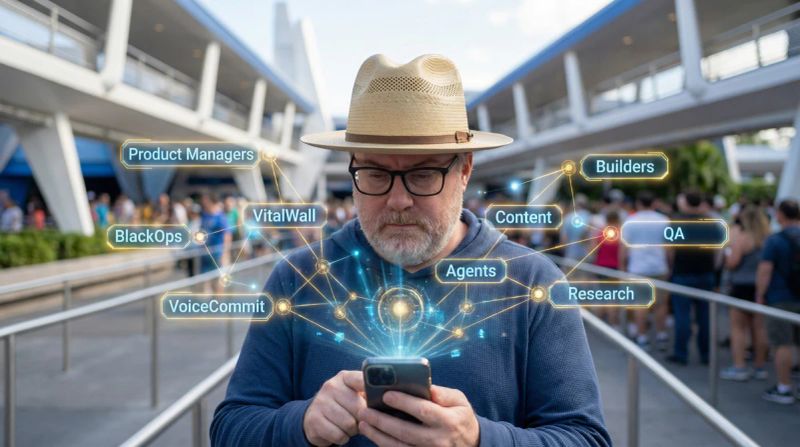
Last year I predicted the future dev team: one senior engineer and an army of AI agents. Tonight, from a phone at Epcot, I watched 10 AI agents run a standup, find production bugs, debate priorities, deploy fixes, and verify them. The prediction is no longer a prediction.
Your AI Agent Already Had File Access. Here's Why Obsidian CLI Changes Everything Anyway.
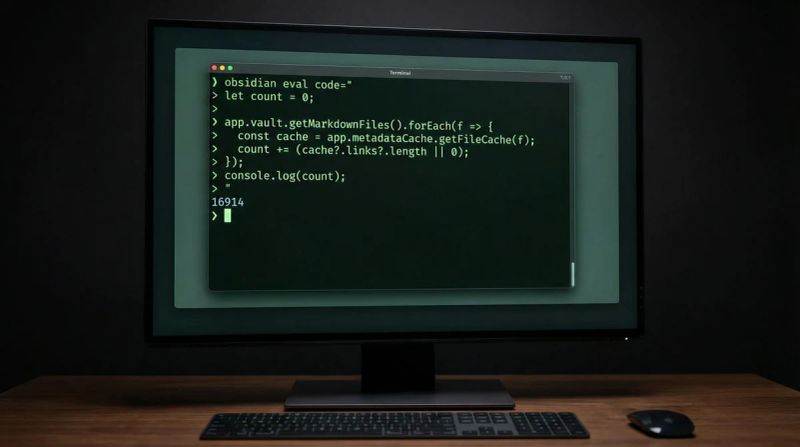
Obsidian 1.12 shipped a CLI. The internet yawned. Agents could already read files. They're missing the point entirely.

The Work Starts When the Thought Does
Self-healing software survives its bugs without changing a line. What I run against my projects changes the source. Logging the defect is what fires the work, and most days the completion email is the entirety of my involvement.