
Stop Giving Claude a Static Doc. Give It a Brain.
Brain turns any Obsidian folder into a living knowledge base any agent can read, any agent can update, and you can have as many as you need.
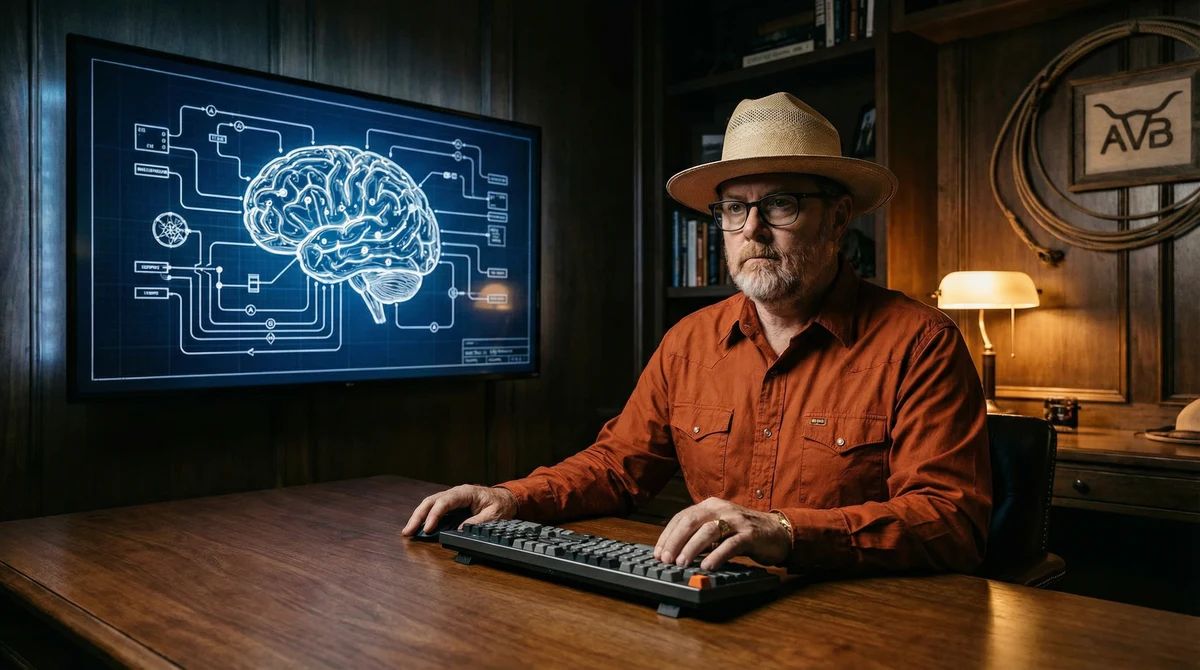
Every serious AI user hits the same wall within a week.
You start with a system prompt. Maybe a README. One doc dropped into a Claude Project as context. It works — until your knowledge lives across more than one file, evolves over time, or needs to travel across more than one agent.
Then the static doc breaks down fast. You are either manually updating it to stay current, or every agent you run is working with stale context.
That is the context problem. Brain solves it.
Andrej Karpathy named the pattern. BlackOps was already running it.
Earlier this year, Andrej Karpathy published a tweet describing what he called "LLM Knowledge Bases" — a system where raw data gets compiled by an LLM into a structured markdown wiki, stored somewhere like Obsidian, and queried and enhanced over time. He noted there was room for a real product to emerge here instead of a collection of hacky scripts.
He was right. And when I read it, I recognized the architecture immediately — because BlackOps Brain had been running that exact pattern in production for months.
Not as a concept. Not as a side project. As the live infrastructure I use every day for content, product knowledge, and client context.
The terminology Karpathy gave it was useful. The insight was real. But the product he was describing already existed. This is it.
What Brain actually is
A folder in Obsidian. That is it.
Not a new tool to learn. Not a new place to write. A folder you already have, or one you create in five seconds. You work in Obsidian the way you already do. Brain watches the folder, walks every subfolder and file, and compiles everything into a single structured context note with a stable ID.
That compiled note is not just a dump of your files. It includes a manifest — every source note with its title, file path, BlackOps note ID, and a summary. The manifest is the map. Individual notes are the territory. An agent navigates with the map and drills into the territory when it needs depth. You get full coverage without blowing up your context window.
It stays current from both directions
Edit a note in Obsidian and Brain updates. Your knowledge base is always current without you touching anything in BlackOps.
But you can also go the other way. Tell an agent to add something — a new decision, a new client note, a new research finding — and the agent writes it back into the Brain via MCP. You are in Claude, or Cowork, or any MCP-compatible client, and you say "add this to the project Brain." It happens. The folder in Obsidian gets the new note. The compiled Brain reflects it.
The knowledge base is alive from both ends. You are never the bridge.
The MCP layer is what makes it work
This is not a file sync tool. It is not a RAG wrapper. The reason Brain can travel across every agent surface — Claude Projects, Claude Code, Cowork, scheduled automations — is because it runs over the BlackOps MCP server.
One tool call: get_brain. Pass a brain ID. Get back the full compiled context note, manifest included. Any MCP-compatible client can call it. That means the same knowledge base is readable from every surface you work from, without copying anything, without maintaining separate versions.
The Obsidian integration handles input. The MCP layer handles distribution. The brain ID is just a pointer — stable, portable, works anywhere.
You can have as many Brains as you want
This is the part that changes how you work.
One Brain per client. One per product. One per project. One for your personal brand. One for your team's architecture decisions. One for your research library.
A consultant with eight active clients has eight Brains. Each agent loads the right one for the right job. No cross-contamination. No context soup. The right knowledge, in the right room, every time.
Every agent surface reads the same knowledge
The Brain ID goes anywhere an agent can call the BlackOps MCP. The same knowledge base travels across every surface you work from.
Claude Projects The original use case. Drop the Brain ID into your Project instructions. Every session starts with your full knowledge base already loaded. No re-explaining. No drift.
Claude Code
Add get_brain to your Claude Code session startup. Your architecture decisions, brand voice, product context, and technical constraints are in the room before you write a line. Claude Code doesn't guess at your patterns. It knows them.
Scheduled tasks and automations
Any agent running on a schedule — a daily summary, a content brief generator, a monitoring task — calls get_brain before it executes. Context is not a session concern. It is infrastructure. The agent knows what it needs to know before it starts.
Cowork Non-developers using Cowork to automate file and task management get the same knowledge layer you have in Claude Code. The Brain travels. The surface doesn't matter.
The mechanism is the same everywhere. One MCP call. Full context. Right knowledge for the right job.
How operators are using it now
The consultant One Obsidian folder per client. Discovery notes, architecture decisions, stakeholder context, open questions. One Brain per folder. Each Claude Project loads the right one. No copy-pasting between engagements. No stale docs.
The SaaS founder Product decisions, competitor research, customer feedback, roadmap notes — all in one Obsidian folder. Brain compiles it. Every agent conversation starts with the full picture. No re-explaining the product from scratch.
The engineering team lead Architecture decisions, RFC notes, system design docs in a shared folder. Brain compiles them into a single context the whole team references in their Claude Projects. Everyone works from the same knowledge base. Decisions don't get lost.
The researcher Papers, articles, and raw notes in Obsidian. Brain compiles a living knowledge base. Claude answers complex questions against the whole folder, pulls individual papers for depth, and writes outputs that get filed back into the vault — making the Brain smarter over time.
No RAG. No scripts. No pipeline to maintain.
There is no embedding setup. No vector database. No custom search engine to build and maintain.
You maintain your notes the way you already do. BlackOps compiles them. Agents read them.
The folder structure itself carries meaning. A note in /research/competitors/ means something different from one in /strategy/decisions/. Brain preserves that structure in the compiled output so agents understand not just what you know, but how you have organized it.
Brain is live now.
Sign up for BlackOps Center and create your first Brain in minutes. Point it at an Obsidian folder. Drop the compiled note ID into your Claude Project. Your agents have context from session one.
When your agent learns something useful, does that knowledge die in the chat, or does it land in files you can ask about later? Reply on the X thread below. I read them.
This post came out of a Brain.
Talk through what you already know. BlackOps turns it into a structured knowledge base, then writes and publishes from it, to your own domain, X, LinkedIn, Threads, and your newsletter. No email until you have seen your Brain.
I wrote this post inside BlackOps, my content operating system for thinking, drafting, and refining ideas — with AI assistance.
If you want the behind-the-scenes updates and weekly insights, subscribe to the newsletter.
Related Posts
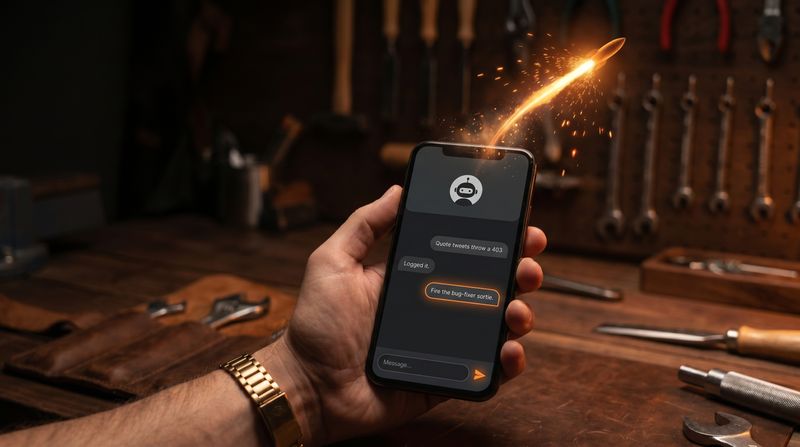
Sorties: Fire Real Actions Straight From Your AI Chat
A Sortie turns a sentence in your AI chat into a real action. Fix a bug, message your team, fire an automation. Set it up once, fire it by name from anywhere, and your keys never touch the conversation.

I Watched a YouTube Video. Claude Wrote This Post.
I didn't open a second tab. I didn't copy-paste anything. I had a thought, told Claude, and this post landed in my BlackOps queue. Here's exactly what happened.

My Workout System Is an iPhone App Now. Claude and I Built It in a Day.
Six weeks ago I wrote about logging every workout by talking to Claude. Yesterday I asked Claude to turn that system into a real iOS app. By dinner it was on TestFlight with working subscriptions. This is what actually happened, including the parts where Apple's paperwork fought back.